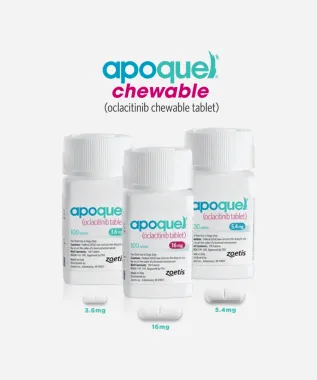
What Is Apoquel?
Apoquel is the brand name for oclacitinib, a prescription medication used to control itching associated with allergic dermatitis and to control atopic dermatitis in dogs at least 12 months old.
It is available as conventional tablets and flavored chewable tablets in 3.6 mg, 5.4 mg and 16 mg strengths. Both forms contain the same active ingredient.
Apoquel is not a corticosteroid, antihistamine or cyclosporine. It belongs to a group of medications called Janus kinase inhibitors, commonly abbreviated as JAK inhibitors.
How Does Apoquel Work?
Apoquel inhibits enzymes involved in transmitting signals from certain cytokines, which are proteins used by the immune system. Several of these cytokines contribute to allergic itching and inflammation.
By reducing these signals, Apoquel can relieve itching relatively quickly. However, it also modifies parts of the immune response. This is why infections, parasites and possible cancer risks must be considered when deciding whether Apoquel is appropriate for a particular dog.
What Is Apoquel Used for in Dogs?
Apoquel is FDA-approved for:
- Control of itching associated with allergic dermatitis
- Control of atopic dermatitis
- Dogs that are at least 12 months old
Allergic itching may be associated with environmental allergens, flea allergy, food allergy, contact reactions or other causes. Apoquel can control itching, but it does not identify or eliminate the underlying trigger.
Persistent itching should be investigated for fleas, mites, bacterial or yeast infection, food reactions and other skin disease. Treating the itch without addressing an underlying infection or parasite may allow the original problem to continue.
How Quickly Does Apoquel Work?
Apoquel can begin reducing allergic itching within several hours, with more substantial improvement often seen during the first day. The response varies according to the dog and the cause and severity of the itching.
If a dog remains severely itchy, develops open sores or appears worse despite treatment, contact a veterinarian rather than increasing the amount or frequency.
Apoquel Tablets and Apoquel Chewable
Apoquel tablets and Apoquel Chewable contain oclacitinib in the same three strengths. The principal difference is that the chewable form is flavored and designed to be readily accepted by dogs.
The medication may generally be given with or without food. Follow the instructions supplied for the particular formulation and make sure the strength on the package matches the strength intended for the dog.
Apoquel Dosage for Dogs
The appropriate strength and schedule depend on the dog’s weight, age, health, treatment stage and response. The FDA-approved regimen includes an initial treatment period followed by a reduced maintenance frequency.
This page does not provide an individual dosing recommendation. Do not continue the initial higher-frequency schedule longer than directed, combine different tablet strengths or change a dog’s maintenance schedule without veterinary guidance.
Possible Side Effects
The most commonly reported side effects include vomiting and diarrhea. Other possible effects include:
- Reduced appetite
- Lethargy or reduced activity
- Increased thirst
- Skin, ear or urinary infections
- New skin lumps or changes in existing growths
- Changes in blood-cell counts or blood-test results
Contact a veterinarian if side effects are persistent or severe, or if the dog develops fever, marked lethargy, breathing difficulty, unusual bruising, persistent digestive problems or signs of infection.
Infections and Immune-System Effects
Apoquel should not be used in dogs with serious infections. Because oclacitinib affects immune signaling, it may increase susceptibility to infection or allow an existing infection or parasitic infestation to worsen.
Reported concerns include bacterial infections, fungal infections, pneumonia and demodicosis caused by Demodex mites. A dog should be evaluated if it develops hair loss, crusting, pustules, draining lesions, coughing, fever or other signs of infection during treatment.
Dogs receiving Apoquel over an extended period may need periodic examinations and blood testing, particularly when other health concerns are present.
Apoquel and Cancer
Apoquel may worsen certain pre-existing cancers. New benign and malignant growths have also been observed during clinical studies and post-approval use, although an observed growth is not necessarily proof that Apoquel caused it.
A veterinarian should consider the risks and potential benefits carefully in a dog with cancer, a previous tumor or a history of recurring growths. New lumps, enlarged lymph nodes, unexplained weight loss or changes in existing masses should be examined.
Which Dogs Should Not Receive Apoquel?
Apoquel should not be used in:
- Dogs younger than 12 months
- Dogs with a serious infection
- Breeding, pregnant or nursing dogs
- Dogs with a known hypersensitivity to oclacitinib or another ingredient in the product
Additional caution may be appropriate for dogs with recurring infections, demodicosis, immune-system disease or a history of cancer.
Medication Interactions
Apoquel has been used with many commonly administered products, including antibiotics, parasite-control medications, vaccines and NSAIDs. Nevertheless, the veterinarian should know about every prescription drug, nonprescription medication and supplement the dog receives.
The safety of combining Apoquel with some immune-suppressing medications has not been established. These include systemic corticosteroids such as prednisone and drugs such as cyclosporine. Do not combine or alternate these medications without specific veterinary instructions.
Apoquel and Vaccinations
Apoquel has been used with vaccines, but a veterinarian should consider the dog’s health, infection history and vaccination needs. Tell the veterinarian that the dog is receiving Apoquel before any vaccination.
Puppies younger than 12 months should not receive Apoquel, regardless of their vaccination schedule.
Can Apoquel Be Used in Cats?
Apoquel is not FDA-approved for cats. Veterinarians have sometimes used oclacitinib extra-label for selected feline skin conditions, but research in cats is more limited and there is no FDA-approved feline dose or treatment schedule.
A cat should receive oclacitinib only under specific veterinary direction. A dog’s Apoquel regimen should never be transferred to a cat.
Apoquel, Cytopoint, Steroids and Antihistamines
Apoquel is one of several approaches to allergic itching. Cytopoint is an injectable antibody treatment intended for dogs. Corticosteroids suppress inflammation broadly, while antihistamines have more limited and variable effects on canine allergic itching.
The most appropriate choice depends on the cause of the itching, the need for rapid relief, the dog’s age and health, infection or cancer history, treatment duration and response to previous therapies. These treatments are not automatically interchangeable.
Can You Buy Apoquel Without Submitting a Vet Prescription?
In the United States, Apoquel is a prescription animal drug. Federal law restricts it to use by or on the order of a licensed veterinarian. That legal classification is separate from an individual supplier’s ordering procedure.
At the time of our latest review, the independent supplier compared on this page did not require customers to submit a veterinary prescription when placing an order. Supplier requirements, availability, prices and shipping terms can change, so verify current information on the supplier’s website.
Dog & Cat Pharm does not prescribe, sell, dispense, handle or ship Apoquel. We provide general medication information and compare independent suppliers.
Frequently Asked Questions
Is Apoquel a steroid?
No. Apoquel is a JAK inhibitor. It targets particular immune-signaling pathways and has different benefits, precautions and adverse effects from corticosteroids.
Does Apoquel cure allergies?
No. Apoquel controls itching and inflammation associated with allergic skin disease, but it does not eliminate the underlying allergy. Flea control, diet investigation, infection treatment or environmental-allergy management may still be needed.
Can Apoquel be stopped suddenly?
Apoquel does not generally require the gradual dose reduction associated with long-term corticosteroid treatment. However, itching may return when it is discontinued. Discuss changes to an ongoing treatment plan with a veterinarian.
Can Apoquel be given with food?
Yes. Apoquel can generally be given with or without food. Giving it with food may be helpful if the dog experiences stomach upset.
What if a dose is missed?
Follow the prescribing veterinarian’s instructions. Do not give two doses together or give extra medication to compensate for a missed dose unless specifically directed.
Should dogs receiving Apoquel have blood tests?
Veterinarians may recommend periodic blood counts and chemistry testing during long-term treatment, particularly when a dog has other health conditions or receives additional medications.
Sources
This page provides general medication and supplier-comparison information and is not a substitute for diagnosis or treatment advice from a veterinarian.