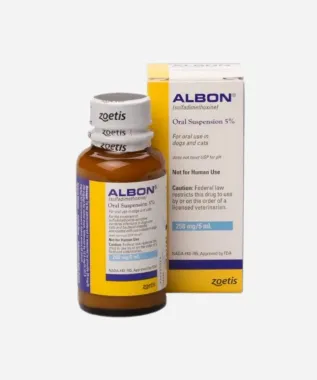
What Is Albon?
Albon is the brand name for sulfadimethoxine, a long-acting sulfonamide antimicrobial. It is an FDA-approved prescription animal drug available in tablets and a 5% oral suspension for dogs and cats.
Albon is not a penicillin and is not related to amoxicillin. It belongs to a different drug class and works in a different way.
How Does Albon Work?
Sulfadimethoxine interferes with the production of folic acid inside susceptible microorganisms. They need folic acid to grow and reproduce. Rather than directly killing them, Albon generally limits their multiplication so the animal's immune system can help clear the infection.
Albon works only against susceptible organisms. It does not treat viral infections, and treatment can fail when the organism is resistant or the illness has another cause.
What Is Albon Used for in Dogs and Cats?
The FDA-approved labels include certain sulfadimethoxine-sensitive bacterial infections of the respiratory, urinary and reproductive tracts, intestines, skin and soft tissues in dogs and cats. Examples listed on the labels include certain cases of cystitis, bacterial enteritis, abscesses and wound infections.
Albon is also commonly associated with treatment of coccidiosis, an intestinal infection caused by microscopic protozoan parasites called coccidia. The FDA labels specifically include bacterial enteritis associated with coccidiosis in dogs. Veterinarians also commonly prescribe sulfadimethoxine for coccidiosis in cats and in other circumstances based on the individual case.
Diarrhea can have many causes, and finding coccidia does not always mean it is responsible for the animal's illness. A veterinarian may examine a stool sample and consider the animal's age, hydration and other symptoms before recommending treatment.
Albon Dosage for Dogs and Cats
Albon treatment commonly uses a larger initial dose followed by smaller doses at 24-hour intervals. The exact amount and treatment duration depend on the animal's weight, diagnosis, formulation, response and health history.
This page does not provide an individual dosing recommendation. Tablets and liquid cannot be exchanged without calculating the correct amount, and the 5% suspension contains 50 mg of sulfadimethoxine per mL. Follow the veterinarian's instructions and the label supplied with the exact product.
If the animal shows no improvement within two or three days, the FDA-approved label advises reevaluating the diagnosis. Do not simply increase the dose or continue treatment indefinitely without veterinary guidance.
Giving Albon
Albon is given by mouth as a tablet or liquid suspension. It may generally be given with or without food. If it causes stomach upset on an empty stomach, ask the veterinarian whether future doses should be given with food.
Shake the liquid well and measure it accurately. The 5% oral suspension is a ready-to-use liquid, not a powder that must be mixed with water. Store the product according to its label; the FDA-approved suspension label specifies controlled room temperature.
Animals must have free access to water and maintain adequate fluid intake during treatment. Contact the veterinarian if the animal is not drinking, is repeatedly vomiting or has diarrhea severe enough to cause dehydration.
Possible Side Effects
Possible effects include:
- Reduced appetite
- Vomiting
- Diarrhea
- Increased thirst or urination
- Skin rash, hives, facial swelling or another allergic reaction
Uncommon but potentially serious sulfonamide reactions can affect the eyes, liver, urinary tract, joints or blood cells. Warning signs include red or painful eyes, squinting or eye discharge; yellowing of the eyes, gums or skin; fever; joint pain or stiffness; unusual bruising or bleeding; marked weakness; blood in the urine; or difficulty urinating.
Stop the medication and seek prompt veterinary advice if a serious reaction is suspected. Difficulty breathing, collapse or rapidly developing facial swelling requires emergency veterinary care.
Dry Eye and Other Sulfonamide Reactions
Sulfonamides can cause reduced tear production and keratoconjunctivitis sicca, commonly called dry eye, particularly in dogs. Untreated dry eye can damage the surface of the eye.
Contact a veterinarian promptly if the animal develops eye redness, thick discharge, frequent blinking, squinting or apparent eye pain during treatment. Longer courses may require additional monitoring based on the animal's risk factors.
Warnings and Precautions
Tell the veterinarian if the animal has previously reacted to a sulfonamide or other "sulfa" medication. Additional caution or an alternative treatment may be needed in animals that are dehydrated or have kidney, liver, thyroid, blood or urinary-tract problems.
The risks of use during pregnancy or nursing should be evaluated by a veterinarian. Older, frail or seriously ill animals may also require closer assessment and monitoring.
Tell the veterinarian about every prescription medicine, over-the-counter drug and supplement the animal receives. Antacids and certain other medications can interact with sulfonamides or change their absorption, effects or elimination.
Albon and Coccidiosis Control
Medication is only one part of controlling coccidiosis. Coccidia are spread through contaminated feces and environments. Prompt stool removal, clean food and water containers, appropriate sanitation and measures to prevent crowding or reinfection may be important, especially in kennels, shelters and multi-animal homes.
Coccidia that commonly infect dogs and cats are species-specific and are not the same as every other organism called coccidia. A veterinarian can explain any hygiene or human-health concerns relevant to the organism identified.
Can You Buy Albon Without Submitting a Vet Prescription?
In the United States, FDA-approved Albon products are prescription animal drugs restricted to use by or on the order of a licensed veterinarian. That legal classification is separate from an individual supplier's ordering procedure.
At the time of our latest review, the independent supplier compared on this page did not require customers to submit a veterinary prescription when placing an order. Supplier requirements, availability, prices and shipping terms can change, so verify current information on the supplier's website.
Dog & Cat Pharm does not prescribe, sell, dispense, handle or ship Albon. We provide general medication information and compare independent suppliers.
Frequently Asked Questions
Is Albon an antibiotic or a parasite medication?
Albon is a sulfonamide antimicrobial with activity against susceptible bacteria and coccidia. It is often called an antibiotic, but it is also widely used as an anticoccidial medication.
Is Albon the same as amoxicillin?
No. Albon contains sulfadimethoxine and is a sulfonamide. Amoxicillin is a penicillin-class antibiotic. They have different mechanisms, uses, precautions and dosing.
Can Albon be used in both dogs and cats?
Yes. Albon tablets and oral suspension are labeled for dogs and cats. The diagnosis, amount and duration of treatment must still be determined for the individual animal.
Does Albon kill coccidia immediately?
Albon generally inhibits the reproduction of susceptible coccidia rather than instantly eliminating every organism. Clinical recovery also depends on the animal's immune response, hydration, severity of illness and prevention of reinfection.
Why is adequate water intake important?
Sulfonamides are eliminated partly through the kidneys, and dehydration can increase the risk of urinary complications. The Albon label specifically instructs that animals maintain adequate water intake during treatment.
Should Albon liquid be refrigerated?
The FDA-approved Albon 5% oral suspension label specifies storage at controlled room temperature. Follow the instructions on the exact product received because storage requirements can differ for other formulations or compounded preparations.
Can leftover Albon be used for another episode of diarrhea?
No. Diarrhea has many possible causes, and a different illness may require different testing or treatment. Using leftover medication can delay the correct diagnosis and may provide the wrong dose or treatment duration.
Sources
This page provides general medication and supplier-comparison information and is not a substitute for diagnosis or treatment advice from a veterinarian.