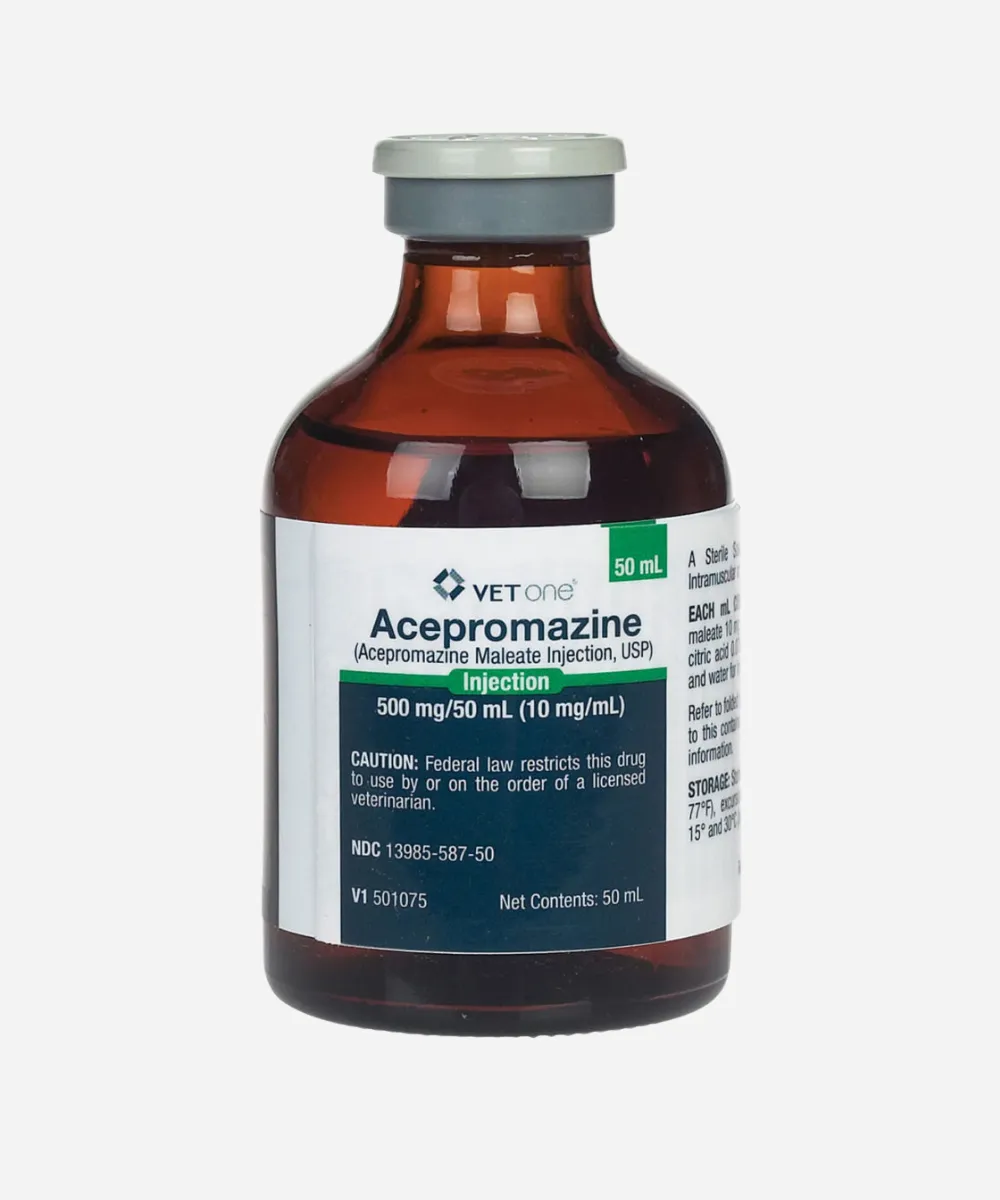
What Is Acepromazine?
Acepromazine is a phenothiazine tranquilizer and sedative used in veterinary medicine. It depresses activity in the central nervous system, relaxes muscles and reduces spontaneous movement. It may be used before examinations, grooming, diagnostic procedures, minor treatments or anesthesia.
Acepromazine is available in oral and injectable forms. FDA-approved acepromazine tablets are labeled for dogs, while certain injectable products are labeled for dogs and cats. Veterinarians may also prescribe acepromazine in other species or circumstances according to their professional judgment.
Acepromazine is a prescription veterinary drug in the United States and is not a controlled substance.
How Does Acepromazine Work?
Acepromazine affects several chemical signaling systems in the brain, particularly dopamine. It also blocks alpha-adrenergic receptors in blood vessels. These actions produce tranquilization, muscle relaxation and reduced activity, but they can also cause a significant decrease in blood pressure.
The degree and duration of sedation vary considerably among animals. A pet may appear sleepy or physically subdued while remaining aware of frightening sounds or events.
Acepromazine Is Not a Pain Reliever
Acepromazine does not provide pain relief. When it is used before a painful procedure, surgery or injury treatment, appropriate pain medication or anesthesia must be provided separately.
It should also not automatically be considered a complete treatment for fear or anxiety. Sedation can reduce an animal’s ability to move without necessarily eliminating the underlying fear. Veterinarians may prefer other medications or combine acepromazine with an appropriate anxiety-management plan.
What Is Acepromazine Used for in Dogs and Cats?
Veterinarians may use acepromazine for purposes including:
- Tranquilization before examinations, grooming or minor procedures
- Chemical restraint when an animal cannot be handled safely
- Pre-anesthetic sedation
- Reducing the amount of general anesthetic required
- Controlling vomiting associated with motion sickness
- Other uses selected by a veterinarian for an individual animal
Acepromazine should not be relied upon by itself to make an aggressive or frightened animal safe to handle. Its tranquilizing effect can sometimes be overridden, and a sedated animal may still react or bite.
How Quickly Does Acepromazine Work?
Oral acepromazine is commonly given in advance of the event for which sedation is required. Effects may become noticeable within approximately 45 to 60 minutes, although timing varies according to the animal, dose, formulation and circumstances.
The effects commonly diminish within 24 hours but may last longer in sensitive animals or those with liver or kidney disease. Follow the veterinarian’s instructions about when to administer it rather than giving an additional dose because the expected effect has not appeared immediately.
Acepromazine Dosage for Dogs and Cats
There is no single acepromazine dose appropriate for every animal. The prescribed amount depends on the species, weight, age, health, intended use, other medications and individual sensitivity.
This page does not provide an individual dosing recommendation. Do not repeat or increase a dose unless a veterinarian has specifically instructed you to do so. Larger dogs do not necessarily require proportionally larger doses, and some breeds can be unusually sensitive to the medication.
Possible Side Effects
Possible effects of acepromazine include:
- Sleepiness or prolonged sedation
- Weakness or poor coordination
- Low blood pressure
- Reduced body temperature
- Slower breathing or changes in heart rate
- Decreased tear production in cats
- Temporary pink or reddish-brown discoloration of the urine
- Restlessness, hyperactivity or paradoxical excitement
- Unexpected aggression, nervousness, biting or chewing behavior
Contact a veterinarian promptly if an animal becomes extremely weak, collapses, has pale gums, has difficulty breathing or cannot be awakened normally. Severe low blood pressure or cardiovascular collapse is an emergency.
Which Animals Require Additional Caution?
Acepromazine may be inappropriate or require special caution in animals with:
- Low blood pressure, dehydration, blood loss or shock
- Significant heart disease
- Liver disease
- Clotting disorders or a low platelet count
- A history of unusual sensitivity to sedatives
- Severe debilitation
Additional care may be needed in very young, elderly, pregnant or nursing animals. The veterinarian should also know if the animal has a history of seizures or other neurologic disease.
Breed and Genetic Sensitivity
Dogs with an MDR1, also called ABCB1, genetic mutation may experience stronger or more prolonged effects from acepromazine. This mutation is seen most often in certain herding breeds and their crosses, including Collies, Australian Shepherds, Shetland Sheepdogs and Old English Sheepdogs.
Greyhounds, giant breeds and some Boxer lines may also be more sensitive. Breed alone does not determine whether acepromazine is safe, but the veterinarian should know the animal’s breed and any available genetic-test results before selecting a dose.
Medication and Chemical Interactions
Acepromazine can intensify the effects of other sedatives, tranquilizers, opioids, anesthetics and central nervous system depressants. A veterinarian should know about every prescription medication, nonprescription product and supplement the animal receives.
Phenothiazine tranquilizers can interact dangerously with organophosphate insecticides and dewormers, including certain older flea products, and with the local anesthetic procaine. Do not administer acepromazine to an animal that may have been exposed to an organophosphate product without first contacting a veterinarian.
This is not a complete interaction list. Products containing metoclopramide, fluoxetine, phenobarbital, blood-pressure medication or other behavior-modifying drugs should also be discussed with the veterinarian.
Can Acepromazine Be Used for Travel?
A veterinarian may occasionally prescribe acepromazine for road travel or motion sickness. However, tranquilization can affect blood pressure, balance and temperature regulation. It is not generally recommended for air travel unless a veterinarian who knows the animal has specifically directed its use and the carrier permits it.
Can You Buy Acepromazine Without Submitting a Vet Prescription?
In the United States, acepromazine is a prescription veterinary drug. Federal law restricts FDA-approved acepromazine products to use by or on the order of a licensed veterinarian. That legal classification is separate from an individual supplier’s ordering procedure.
At the time of our latest review, the independent supplier compared on this page did not require customers to submit a veterinary prescription when placing an order. Supplier requirements, product availability, prices and shipping terms can change, so verify current information on the supplier’s website.
Dog & Cat Pharm does not prescribe, sell, dispense, handle or ship acepromazine. We provide general medication information and compare independent suppliers.
Frequently Asked Questions
Is acepromazine an anti-anxiety medication?
Acepromazine is primarily a tranquilizer and sedative. It can reduce movement and visible reactions, but it may not eliminate fear or anxiety. It is therefore not always an appropriate medication to use by itself for thunderstorms, fireworks or other fear-producing situations.
Does acepromazine relieve pain?
No. Acepromazine has no meaningful pain-relieving effect. Animals undergoing a painful procedure or recovering from an injury require appropriate analgesic treatment in addition to any tranquilizer.
Can a sedated animal still bite?
Yes. The tranquilizing effect can be incomplete or overridden, particularly in a frightened or highly stimulated animal. Rarely, acepromazine can also produce agitation or unexpected aggression. Continue to use appropriate handling precautions.
Can acepromazine be given with gabapentin or trazodone?
Veterinarians may sometimes use acepromazine with other medications, but the combination can increase sedation, weakness and poor coordination. Do not combine these medications unless a veterinarian has provided specific instructions for that animal.
What should I do if acepromazine does not appear to work?
Do not automatically give another dose. Response can be delayed or incomplete, and additional medication could later produce excessive sedation or dangerously low blood pressure. Contact the prescribing veterinarian for instructions.
Sources
This page provides general medication and supplier-comparison information and is not a substitute for diagnosis or treatment advice from a veterinarian.