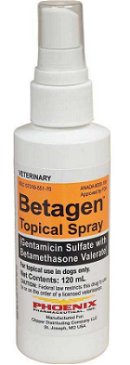
Compare Betagen Spray for Dogs - Some Suppliers Don't Require You to Submit a Vet PrescriptionLooking for Betagen Spray for Dogs? Dog & Cat Pharm helps pet owners compare independent sources for Betagen Spray - from suppliers that do not require customers to submit a veterinary prescription - along with current price, package size and shipping information. How this site works: Dog & Cat Pharm does not sell, dispense, handle or ship medications. We provide product information and links to independent suppliers. We may receive an affiliate commission if you purchase through one of our links. Betagen Spray® for superficial skin lesions in dogs
Betagen for Dog Itching: What to KnowWhen a dog will not stop scratching, chewing, or rubbing raw spots on the floor, you do not need a lecture about “monitoring the situation.” You need relief that actually targets the problem. Betagen for Dog Itching is one of those medications pet owners look for when hot spots, inflamed skin, and infected irritation are getting out of hand. Betagen is a topical spray used on dogs for certain skin conditions where inflammation and bacterial infection show up together. That matters, because a lot of itching is not just itching. Once a dog starts scratching hard enough, the skin breaks down, bacteria move in, and a simple irritation turns into a cycle of redness, moisture, pain, and more scratching. What Betagen does for itchy dogsBetagen is not a basic anti-itch spray. It combines two active ingredients that do two different jobs. One helps control inflammation and itching. The other fights susceptible bacteria on the skin. That combination is why Betagen is commonly used for moist dermatitis, hot spots, and superficial skin infections where the area is irritated, inflamed, and actively being made worse by bacteria. This is where many pet owners waste time and money on the wrong products. If the skin is red but not infected, one approach makes sense. If the skin is infected but not terribly inflamed, that may call for something else. But when your dog has both, a combination product can be more practical than trying to patch together multiple treatments. Still, Betagen is not a cure-all. It can help stop the itch-scratch spiral, but it does not erase the root cause of every skin problem. If your dog’s itching comes from fleas, food allergy, environmental allergy, mange, yeast, or a hormonal issue, Betagen may calm the skin while the bigger problem keeps going. When Betagen for Dog Itching makes senseThe best use case for Betagen is localized skin trouble, not full-body itching from nose to tail. Think in terms of one or several irritated patches rather than a dog who is generally itchy everywhere all the time. It is often considered when a dog has hot spots, moist irritated lesions, inflamed areas caused by licking or scratching, and bacterial skin infections that are close to the surface. These spots may look red, damp, tender, or crusted. Hair may be missing around the lesion, and the dog may react when you touch it. If that sounds familiar, Betagen can be a practical option because it treats what is happening on the skin right now. That is useful for experienced pet owners and rescue operators who have seen the same pattern before and know they need something stronger than an over-the-counter skin soother. On the other hand, if your dog has chronic ear disease, widespread hair loss, constant paw licking, or recurring infections every few weeks, that points to a bigger issue. In those cases, Betagen may help a flare, but it is not the whole answer. How the medication worksBetagen typically contains gentamicin, an antibiotic, and betamethasone, a corticosteroid. Gentamicin targets certain bacteria that commonly complicate skin lesions. Betamethasone helps reduce inflammation, redness, swelling, and itching. That steroid piece is why the product can seem to work fast. Dogs often feel better quickly when inflammation drops. Less itching means less self-trauma. Less licking and scratching gives the skin a chance to dry out and heal. But speed can fool people. A dog looking better in two days does not mean the underlying trigger is gone. It only means the skin is less inflamed. If fleas are still present, if the dog is reacting to grass or food, or if the lesion is actually fungal rather than bacterial, symptoms can come roaring back. How to use Betagen safelyTopical medications are simple, but “simple” does not mean sloppy. The area should generally be clean and dry before application. If the coat is thick, clipping hair around the lesion may help the spray reach the skin instead of just coating fur. Apply only as directed on the product labeling or according to prior veterinary guidance if your dog has used it before. More is not better. Spraying too much, too often, or for too long can increase the risk of side effects, especially because this product includes a steroid. Keep your dog from immediately licking the treated area if possible. That may mean distraction, a cone, or applying the medication when you can supervise. If the dog licks off every dose, you are not treating the skin effectively. You should also avoid casual use on large body areas unless you know exactly what you are dealing with. A localized hot spot is one thing. Repeated steroid-antibiotic use across a broad area of skin is another. That is where self-treatment starts getting expensive and less effective. What Betagen will not fixThis is the part people skip, and it is the part that saves time. Betagen will not kill fleas. It will not prevent allergy flares. It will not treat every yeast problem. It will not correct hypothyroidism, mange, autoimmune disease, or poor diet. It also will not solve behavioral licking that started from boredom or anxiety and then created a skin lesion. If your dog gets the same irritated patch over and over in the same season, allergy may be the real driver. If the skin smells musty or greasy, yeast may be involved. If there are circular lesions, widespread scaling, or hair loss in unusual patterns, the issue may not be bacterial dermatitis at all. That does not mean Betagen is a bad choice. It means you should treat it like a targeted tool, not a magic reset button. Side effects and red flagsMost dogs tolerate topical Betagen well when it is used correctly on limited areas. But there are trade-offs. Steroids can thin the skin with prolonged use, delay healing in some cases, and mask symptoms that would otherwise tell you the condition is changing or worsening. If the area gets more red, more painful, starts oozing more, develops a bad odor, or spreads despite treatment, stop guessing. That is a sign the medication is not the right fit, the infection is not responding, or another cause is in play. Use extra caution on sensitive areas like around the eyes, inside the mouth, or deep in skin folds unless the product instructions specifically allow it. Topical steroids and antibiotics are not meant for careless spraying near delicate tissue. If your dog is pregnant, nursing, very young, or dealing with a larger health issue, that is another time to slow down and read the label closely. Medication access should be easier, not reckless. Betagen vs general anti-itch productsA lot of anti-itch products on the market are made to soothe skin, not treat infected lesions. They may contain oatmeal, antiseptics, hydrocortisone, lidocaine, or chlorhexidine. Some are fine for mild irritation. Some are useful for maintenance. But they are not interchangeable with Betagen. The difference is that Betagen is a medicated combination product aimed at inflammatory skin conditions with bacterial involvement. If your dog has a serious hot spot, a cosmetic skin spray may barely touch it. If your dog just has mild seasonal itch without infection, Betagen may be more medication than the situation calls for. That is the trade-off. Stronger treatment can be more effective when the diagnosis is right, but less appropriate when it is not. Who usually looks for this productBetagen tends to appeal to practical dog owners who have dealt with recurrent skin flare-ups before and do not want to jump through the same expensive hoops for every refill. It also makes sense for rescues and multi-dog households where hot spots and lick lesions are not rare events. That is why sites like Dogandcatpharm.com matter to people who already know what they need. No Vet? No Problem. If you have used Betagen before, understand what it is for, and want a direct path to getting it, convenience is not a luxury. It is the whole point. Before you buy Betagen for dog itchingBe honest about what you are treating. Is it one inflamed, infected patch, or is your dog itching everywhere? Is the lesion moist and raw from scratching, or is the skin dry and flaky? Has this happened before, and did the product help then? Those questions matter more than marketing claims. If the pattern fits, Betagen can be a smart, efficient option for fast relief of localized itching tied to inflammation and bacterial skin trouble. If the pattern does not fit, using it anyway can waste time while the real problem keeps building. The smartest move is not chasing every anti-itch product on the shelf. It is matching the medication to the skin problem in front of you, then paying attention to whether the dog is actually getting better.
Questions?
Email:
dogandcatpharm.com@gmail.com |
 | |
 |
 Ships from Niagara Falls, NY